- 0 views
- By Caroline McNally
Why California Wildfires Spread So Fast: The Perfect Storm of Climate, Wind, and Development
California’s wildfires have become larger, more destructive, and harder to control. Once ignited, they can spread at an astonishing pace, consuming entire neighborhoods and landscapes within hours. But why do these fires move so quickly from home to home, area to area? The answer lies in a dangerous combination of climate conditions, strong windstorms, and human development patterns.
The Role of Climate and Dry Conditions
California’s increasingly extreme weather plays a major role in wildfire spread. Prolonged droughts dry out vegetation, turning forests and grasslands into vast fields of fuel. Heavy rains in wetter months allow vegetation to grow rapidly, only to dry out later and become even more flammable. This cycle—often called “climate whiplash”—creates the perfect conditions for wildfires to ignite and spread.
Additionally, record-high temperatures have made wildfires more intense. The heat dries out soil and plants, lowering moisture levels and making them more likely to ignite. This is why even a single spark from a power line, a car, or a lightning strike can set off an inferno.
Windstorms: Nature’s Fire Accelerant
One of the biggest reasons California wildfires spread so quickly is the presence of powerful windstorms. The state experiences several types of fire-fueling winds, the most infamous being the Santa Ana winds in Southern California and the Diablo winds in the north. These dry, gusty winds:
- Supercharge the flames by providing a steady supply of oxygen
- Carry embers miles ahead of the main fire, igniting new blazes in homes and dry brush
- Push flames at high speeds, making wildfires nearly impossible to contain
- Knock down power lines, which can spark fires in already dry conditions
During major fire events, winds have been recorded at speeds exceeding 60 mph, spreading flames faster than firefighters can react. These wind-driven wildfires are particularly deadly because they leave little time for evacuation or fire suppression.
Fire Jumps from House to House
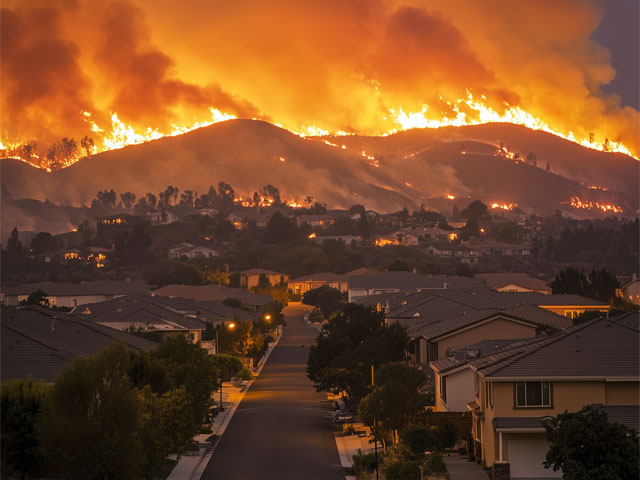
In many cases, wildfires don’t just spread through forests—they leap from home to home. This is especially true in the wildland-urban interface (WUI), where houses are built close to undeveloped land.
- Flying embers from the main fire can land on rooftops, dry lawns, or wooden decks, starting new fires even miles away.
- Radiant heat from burning homes can ignite neighboring structures.
- Flammable landscaping, such as dry grass, wood fences, and pine trees, can act as a bridge for fire to spread through neighborhoods.
In extreme cases, entire communities can be wiped out in a matter of hours. The 2018 Camp Fire, which destroyed the town of Paradise, was largely fueled by high winds carrying embers far ahead of the fire front.
Fuel Overload: The Unseen Danger
Decades of fire suppression policies have allowed dead trees and dry underbrush to accumulate, creating an overabundance of fuel. In a healthy ecosystem, smaller natural fires would clear out excess vegetation. But because many fires have been suppressed, today’s wildfires burn hotter and spread faster than ever before.
Conclusion: A Growing Threat
The rapid spread of California wildfires is the result of a dangerous mix of climate change, high winds, human development, and excess fuel buildup. Addressing this crisis will require better land management, fire-resistant construction, and climate action to reduce the risk of these devastating fires. Until then, wind-driven wildfires will continue to pose a growing threat to communities across California.
If you’re in need of storm response services or want to discover how Maverick Storm Services remains equipped and on standby, please get in touch with us.


