- 0 views
- By Caroline McNally
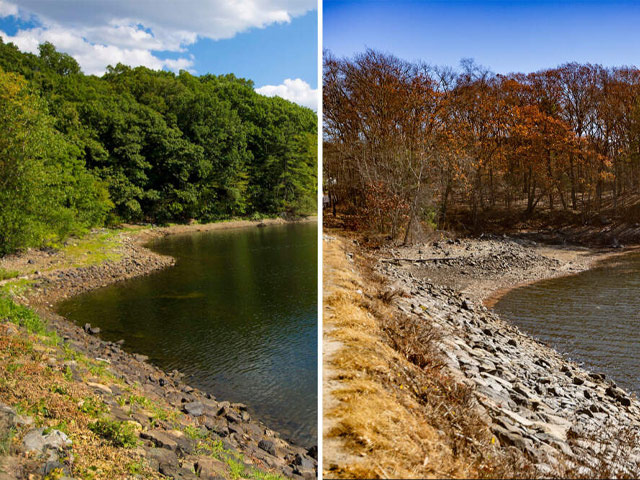
This past summer and autumn, New England has been grappling with an expanding and deepening drought. While dry spells aren’t unheard of in the Northeast, the severity, timing, and breadth of conditions this year have many water managers, foresters, farmers, and gardeners on edge.
What’s Going On — In a Nutshell
- As of mid-September 2025, more than 81 % of the Northeast is experiencing some level of drought, with nearly 3 % in extreme drought conditions.
- In New England specifically, “extreme drought” (D3) has expanded across parts of northern New England — especially New Hampshire and Maine.
- In New Hampshire, about 86 % of the state is now under drought conditions; in Maine, around 63 % is affected.
- By contrast, southern New England (e.g. parts of Massachusetts and Rhode Island) is faring somewhat better: about 16 % of Massachusetts is in drought zones, and 13 % of Rhode Island.
- Streamflow and river flows are well below historical norms across many watersheds, exacerbating stress on aquatic ecosystems and water supply systems.
Why This Matters: Ecosystems, Water Supply & Autumn Foliage
Declining water tables, wells, and streams
With prolonged dry conditions, groundwater recharge is limited, affecting private wells, streams, and springs. In some areas, well users report declining water levels just as household demand remains. Over time, this can strain aquifers and municipal supply if the pattern persists.
Stress on vegetation and fall color dynamics
Trees, shrubs, and wild undergrowth are under moisture stress. Not only does this raise the risk of early leaf drop or muted color, but dry soils may carry more heat stress into winter, making plants more vulnerable. In New Hampshire, local reports warn the drought may threaten the vibrancy of fall foliage and affect well performance.
Wildfire risk and forest health
Dry fuels in forests — dead leaves, branches, underbrush — increase the likelihood of forest fires, which historically have been rare in the humid Northeast but are becoming more of a concern in dry years. Lower humidity and soils that lack moisture insulation further amplify this risk.
Agricultural & economic impacts
Crops benefit from consistent moisture, and even perennial systems (orchards, berries, hay fields) are vulnerable. Drought can reduce yields, force irrigation where available, and create stress for livestock operations. For smaller growers and hobby farms without deep reserves of irrigation water, losses can be severe.
Historical Perspective: Is This Unusual for New England?
While drought is less frequent in New England than in arid regions, the Northeast is not immune. A few important points of comparison:
- Scientists point to historic droughts in 2000, 2016, 2020, and 2022 — all of which stressed the region more than is typical, with conditions rarely seen since the 1960s.
- The 2016 drought, for example, left much of New England receiving only half of expected rainfall in some places.
- 2025 is notable because drought conditions have worsened more sharply compared with this time in 2024. A year ago, neither Massachusetts nor Maine was in drought; now, nearly half of Maine is in drought, including severe levels in some parts, and Massachusetts is reporting moderate drought in Cape Cod and adjacent areas.
- According to the Northeast Regional Climate Center, 22.82 % of New Hampshire is now in extreme drought, the highest coverage in that state’s history under the U.S. Drought Monitor system.
So while periodic droughts have occurred before, the rapid expansion, high severity, and broad coverage this year make the situation more alarming.
Where We Go from Here: Forecasts & Mitigation
Rainfall outlook
Seasonal forecasts offer a sliver of hope: they predict drought removal or improvement in many parts of New York, Massachusetts, Vermont, and New Hampshire. However, coastal Maine is expected to retain drought conditions longer.
Still, forecasts are probabilistic — meaning that while improvement is favored, it’s not guaranteed. A few underwhelming storms or a dry autumn could prolong or resurge drought conditions.
What can communities and landowners do?
- Water conservation & restrictions: Municipalities may consider watering bans, especially for nonessential uses (lawns, car washing, ornamental irrigation). Encouraging residents to reduce indoor use also helps preserve supply for essential needs.
- Landscape adaptation: Switching to drought-tolerant or native plants that demand less water helps reduce landscape stress. Mulching, soil amendments, and efficient irrigation (e.g. drip instead of sprinkler) preserve what moisture remains.
- Forest and wildfire management: Proactive practices—like removing dead fuels, thinning dense overgrowth, and prescribed burns where safe—can reduce fire risk.
- Monitoring & early warning systems: Installing sensors, stream gauges, and groundwater monitoring helps provide warning when wells or streams begin to drop critically.
- Planning for resilience: Long-term strategies like rainwater capture, more robust storage, and strategies for drought‐tolerant land uses will matter more in future dry cycles.
Final Thoughts
New England is not used to being parched. But what we’re seeing in 2025 is a potent reminder that even humid regions can fall into serious drought when dry anomalies align with warming trends and water demands. The scale and speed of the current drought are stressing natural systems and human infrastructure alike.
History tells us that such events are not without precedent — yet the way they unfold matters. How communities, municipalities, and residents respond now could help buffer us against worse cycles ahead.
If you’re in need of storm response services or want to discover how Maverick Storm Services remains equipped and on standby, please get in touch with us.


