- 0 views
- By Caroline McNally
Across the United States, much of the electrical grid infrastructure that communities rely on every day is decades old. A significant portion of power lines, transformers, and utility poles were installed in the mid-to-late 20th century and are now operating well beyond their originally intended service life. Industry studies consistently show that a majority of grid components are more than 25 years old, with many approaching the end of their functional lifespan. This aging foundation presents growing challenges for utilities tasked with maintaining reliable service.
When infrastructure exceeds its design life, reliability begins to decline. Older equipment is more susceptible to mechanical failure, insulation breakdown, and structural weakening. Research into outage causes has shown that the vast majority of power interruptions originate within the distribution system — the poles, wires, and equipment closest to homes and businesses. As these components age, the likelihood of service disruptions increases, even in the absence of severe weather.
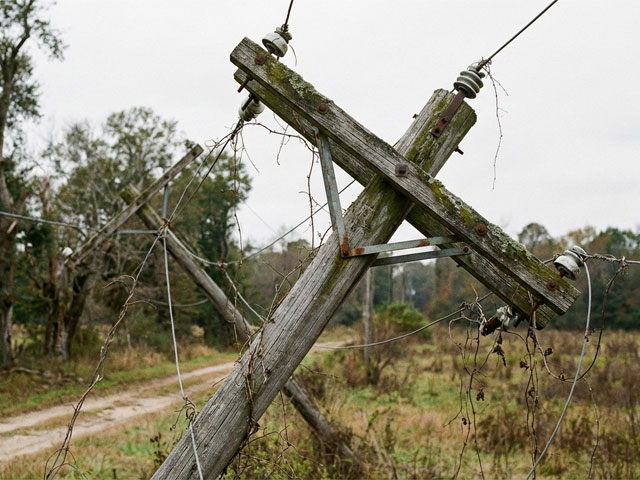
Utility poles offer a clear example of the challenges posed by aging assets. Wooden poles are typically designed to last 30 to 40 years, yet many in service today are far older. Over time, internal decay, ground-line deterioration, and hardware fatigue reduce structural integrity. This often leads to unexpected failures that require emergency replacement, placing additional strain on crews, budgets, and restoration timelines.
Transformers and substation equipment face similar risks. Many of these critical components were installed decades ago and now operate under heavier electrical loads than originally anticipated. As electricity demand continues to grow — driven by population growth, electrification, and modern technology — older equipment is pushed closer to its limits. Compounding the issue, large grid components often have long manufacturing lead times, making proactive replacement difficult once failures begin to occur.
Aging infrastructure also limits the grid’s ability to adapt to modern energy demands. Much of the existing system was designed for one-way power delivery from centralized generation sources. Today’s grid must accommodate distributed energy resources, renewable generation, electric vehicles, and increased digital connectivity. Older equipment often lacks the flexibility and capacity needed to support these changes without significant upgrades or reinforcement.
While federal programs and utility investments are beginning to address infrastructure modernization, the scale of the challenge remains substantial. Billions of dollars are being directed toward grid resilience and reliability, yet experts widely agree that long-term investment will be required to replace aging assets and prevent future failures. Until modernization catches up, utilities will continue to rely heavily on rapid maintenance and emergency repair efforts to keep systems operational.
For storm-response and utility repair providers, aging infrastructure helps explain why outages and failures can occur even under relatively routine conditions. Proactive inspections, targeted maintenance, and strategic upgrades play a critical role in reducing emergency events. As communities depend more than ever on reliable power, addressing the silent risk of aging infrastructure remains essential to long-term resilience and public safety.
If you’re in need of rapid storm response services, emergency utility repairs, or infrastructure restoration, Maverick Storm Services is ready to mobilize. Our experienced crews specialize in restoring power, communications, and critical utility systems following severe weather events, ensuring communities and businesses can recover quickly and safely.
We remain fully equipped and on standby year-round with storm-hardened utility crews, advanced equipment, and proven response protocols. From downed power lines and damaged substations to fiber, wireless, and grid infrastructure repairs, our team is prepared to deploy at a moment’s notice to support utilities, municipalities, and private operators during and after major storms.
To learn more about our storm preparedness capabilities, disaster recovery services, or to request immediate assistance, contact Maverick Storm Services today. Our commitment to safety, reliability, and rapid response makes us a trusted partner in utility storm restoration and emergency response operations.


